 Uri Herbs Workshop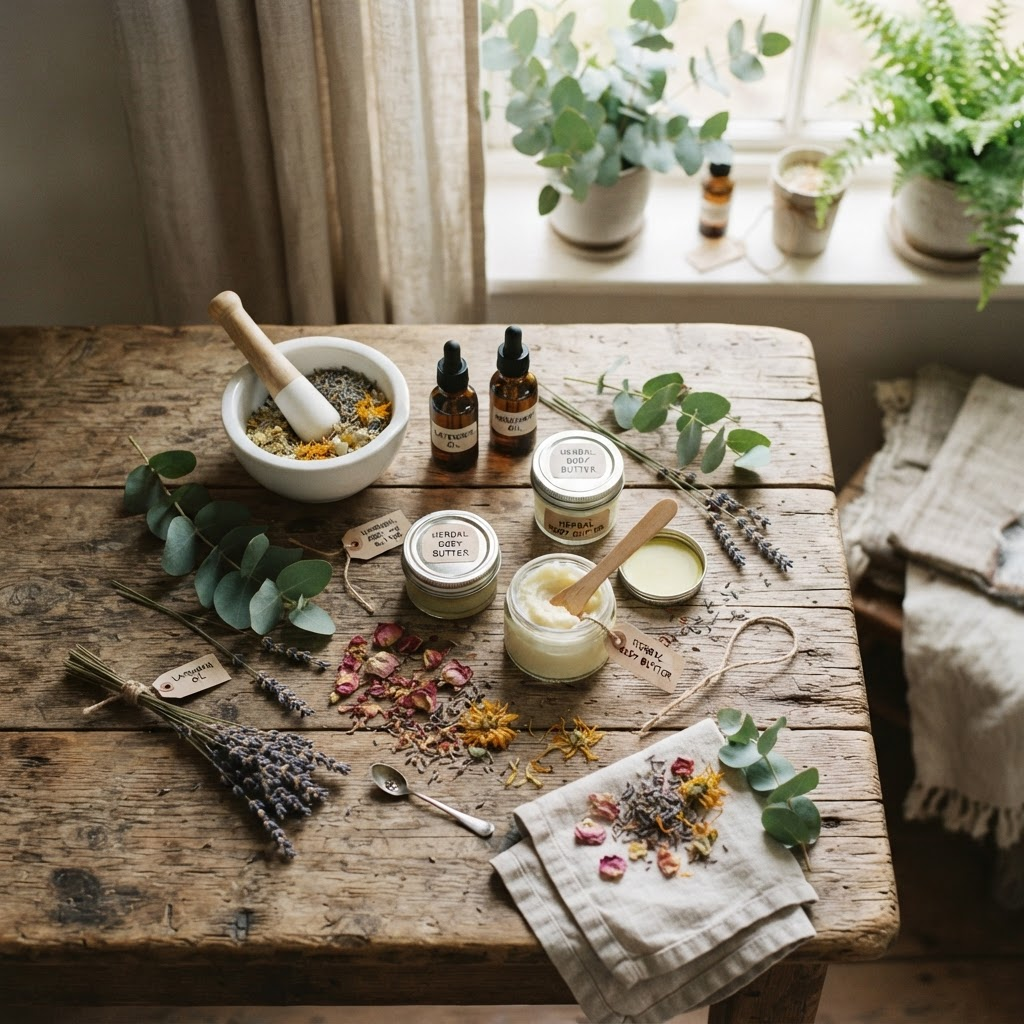
Most natural skincare recipes are simpler than they look on a label. Strip away the marketing and you are usually left with three components: a carrier oil or butter for the base, a handful of active plant extracts, and a small amount of essential oil for scent and mild therapeutic effect.
Choosing a Base
Shea and cocoa butter are the two we reach for most often. Shea is lighter and absorbs faster, which makes it better for daytime hand and face balms. Cocoa butter is richer and sits longer on the skin, so it works well in a night balm or anything meant for very dry patches like elbows and heels. Neither needs much help — a good butter is already 80% of the way to a finished product.
The Essential Oil Rule of Thumb
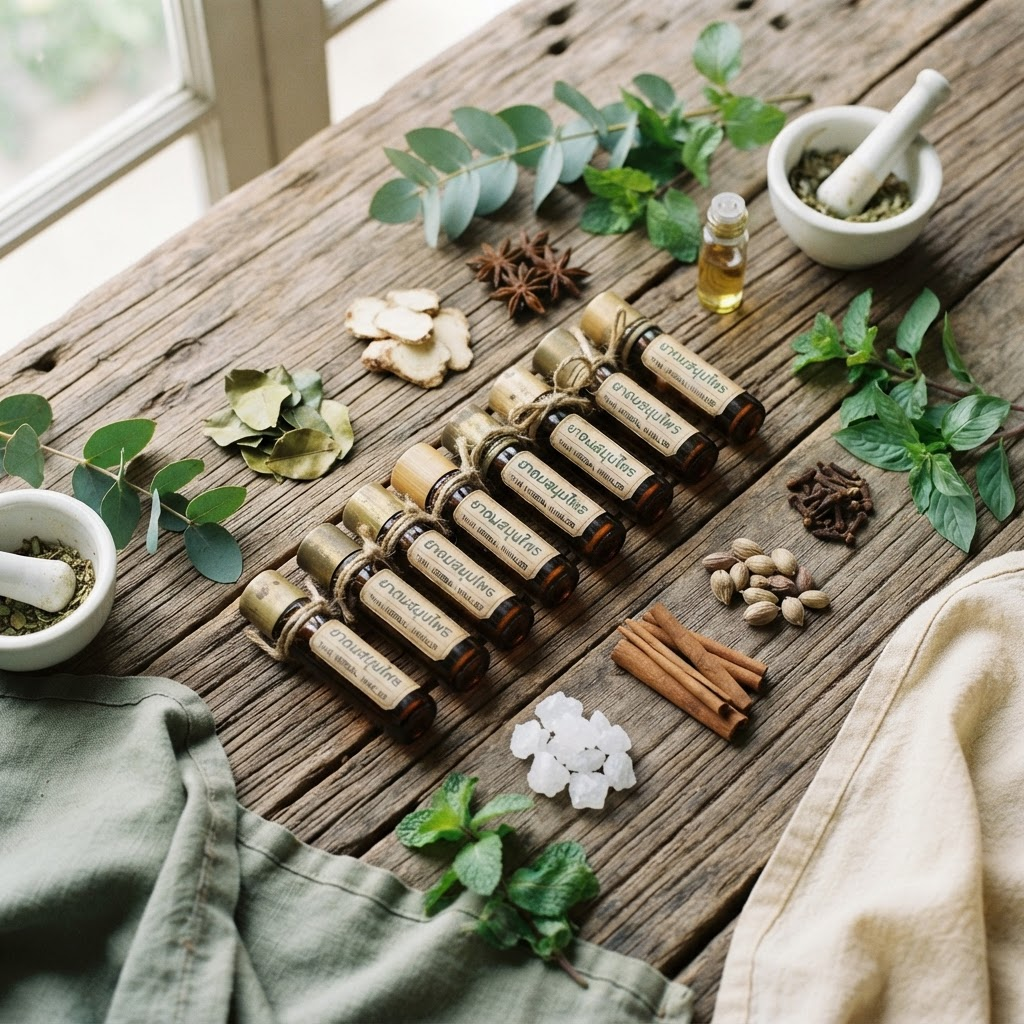
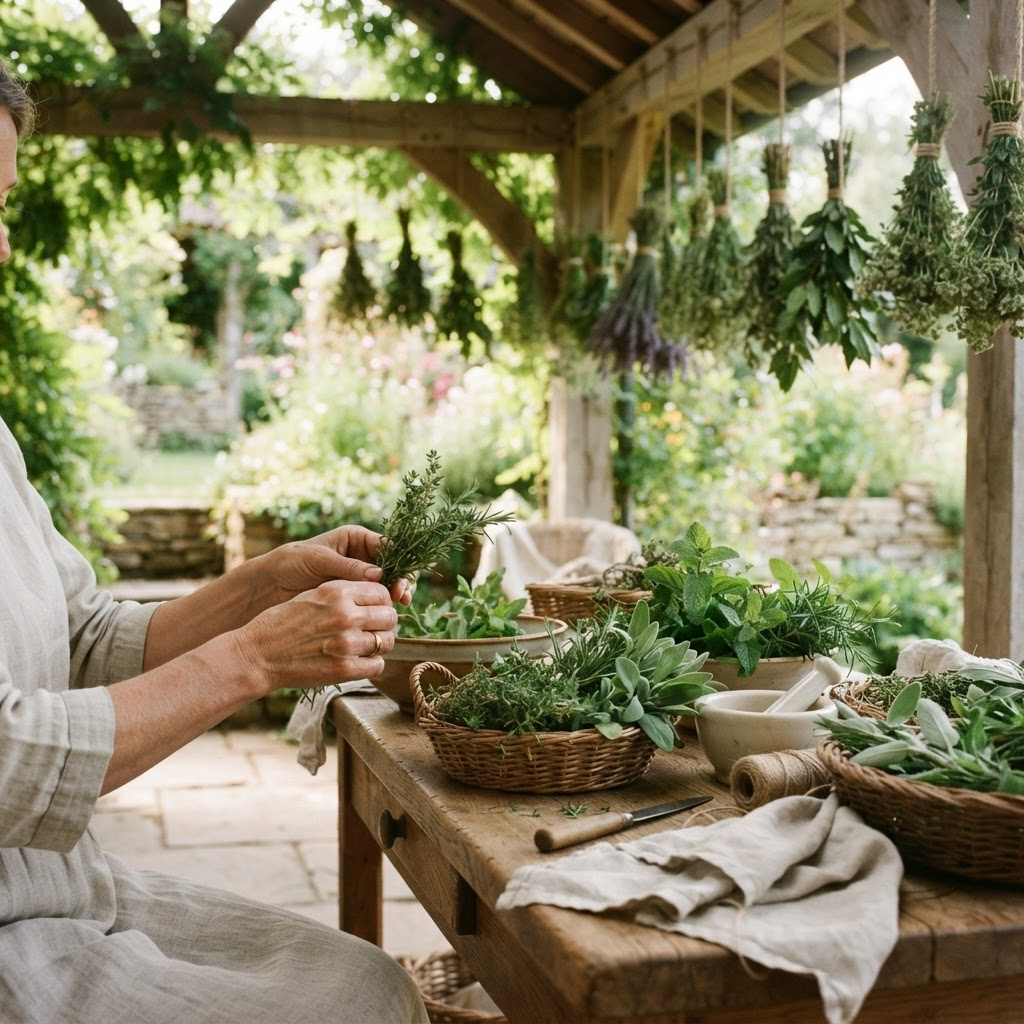
This is where most home recipes go wrong — not by choosing the wrong oil, but by using too much of it. A safe general rule for a leave-on body product is a 1–2% dilution, which works out to roughly 5 to 10 drops of essential oil per 100ml of finished balm or butter. Lavender and chamomile are the most forgiving starting points; citrus oils are lovely in scent but can be more reactive on skin exposed to direct sun, so we save those for evening products.
The goal is a product that smells like a garden, not a perfume counter. If you can smell it from across the room, it is too strong.
In the workshop we finish with a short lesson on patch-testing: a small dab on the inner wrist, left for a day, before using anything on the face. It is a five-minute habit that prevents almost every skincare mistake we see people make at home.