 Uri Herbs Workshop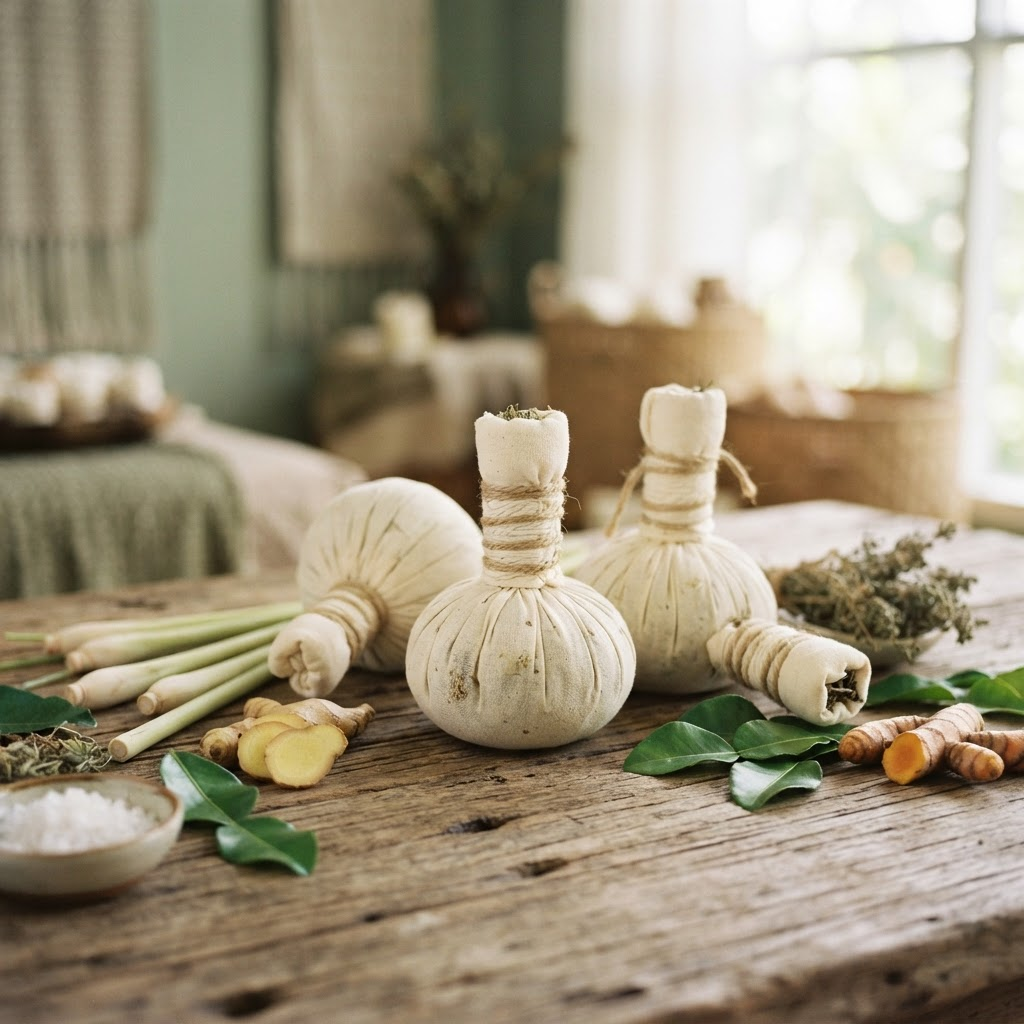
A traditional Thai herbal massage ball — luk pra kob — is not one recipe but a small family of them, each formulated for a different job. Some are built for deep heat after a hard day of physical work. Others are gentler, meant for sore feet or a tired back at the end of a long flight. The wrapping and steaming method is the same; what changes is what goes inside.
Choosing Herbs for Heat
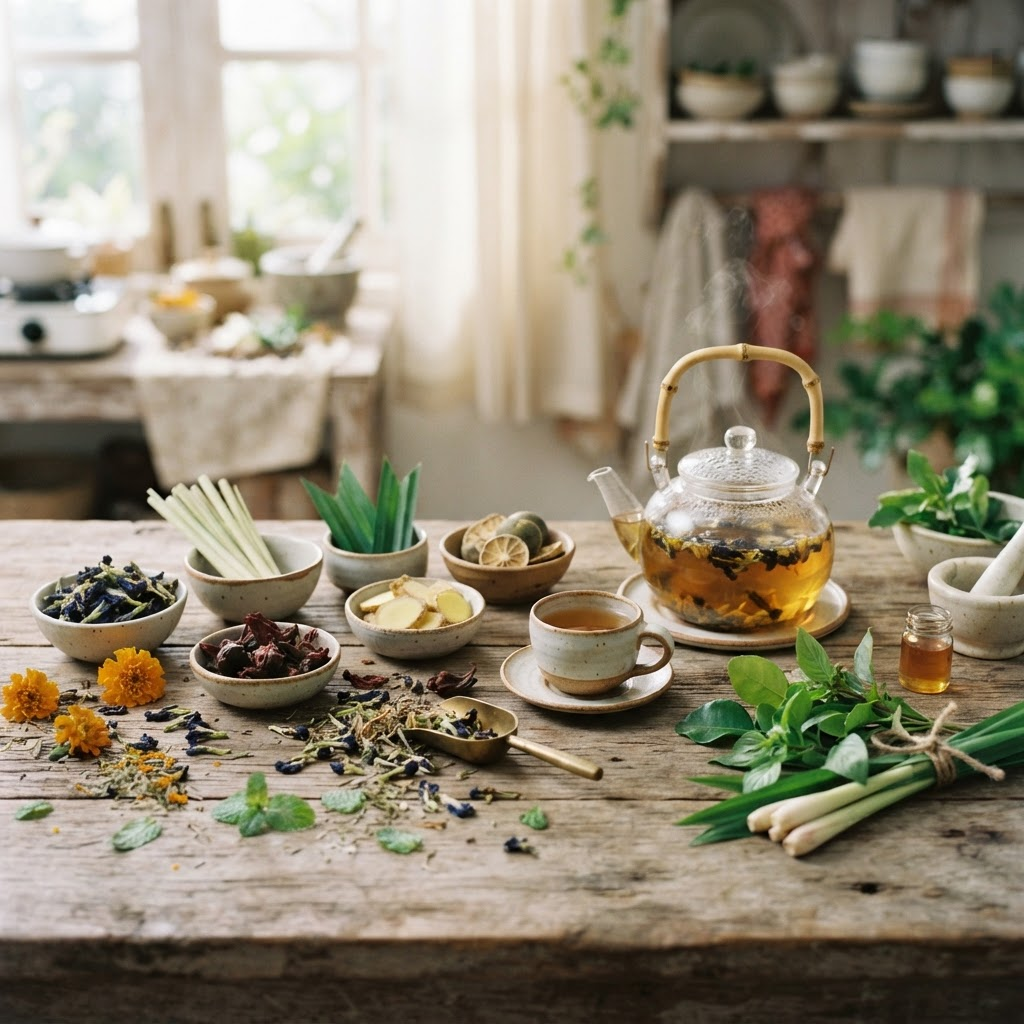
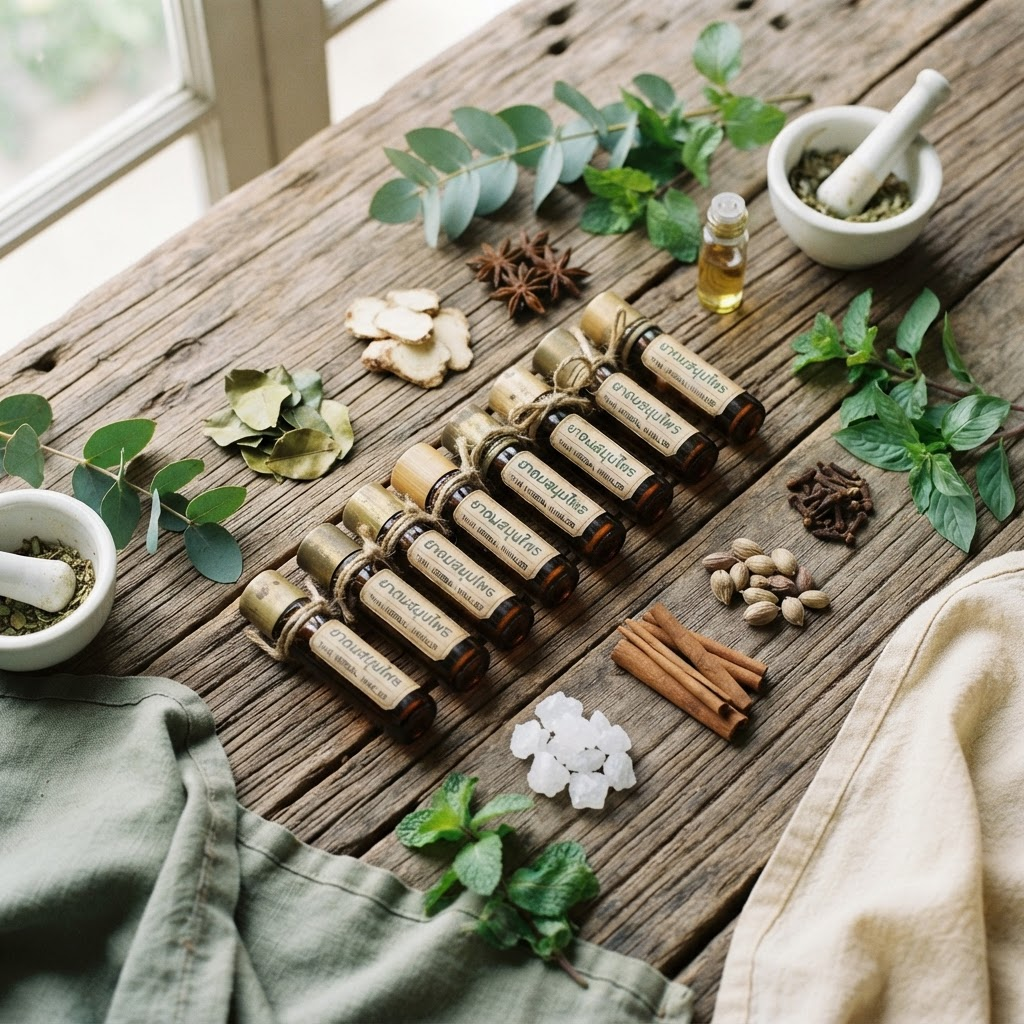
Ginger, turmeric, and lemongrass form the backbone of most warming blends. Ginger brings the strongest heat and is used for muscles that need real, penetrating warmth — the kind that lingers after the massage ends. Turmeric contributes color and a subtler, more grounding warmth, while lemongrass keeps the whole blend from feeling heavy by adding a lighter, citrus note on top.

The Steam Changes Everything
Herbs bundled dry release very little of their oil. It is the steam — usually 15 to 20 minutes over simmering water — that opens the plant material and pushes the aromatic oils to the surface of the cloth wrapping. This is also why a herbal ball should be used warm, ideally within the same session it was steamed: most of what makes it effective is the heat carrying the oils into the skin, not the herbs sitting inertly inside the cloth.
We wrap each ball tightly enough to hold its shape through repeated pressing, but not so tightly that steam cannot reach the herbs inside. Getting that balance right by feel, rather than by a fixed measurement, is usually the part of the workshop that takes people by surprise — and the part they remember longest.