 Uri Herbs Workshop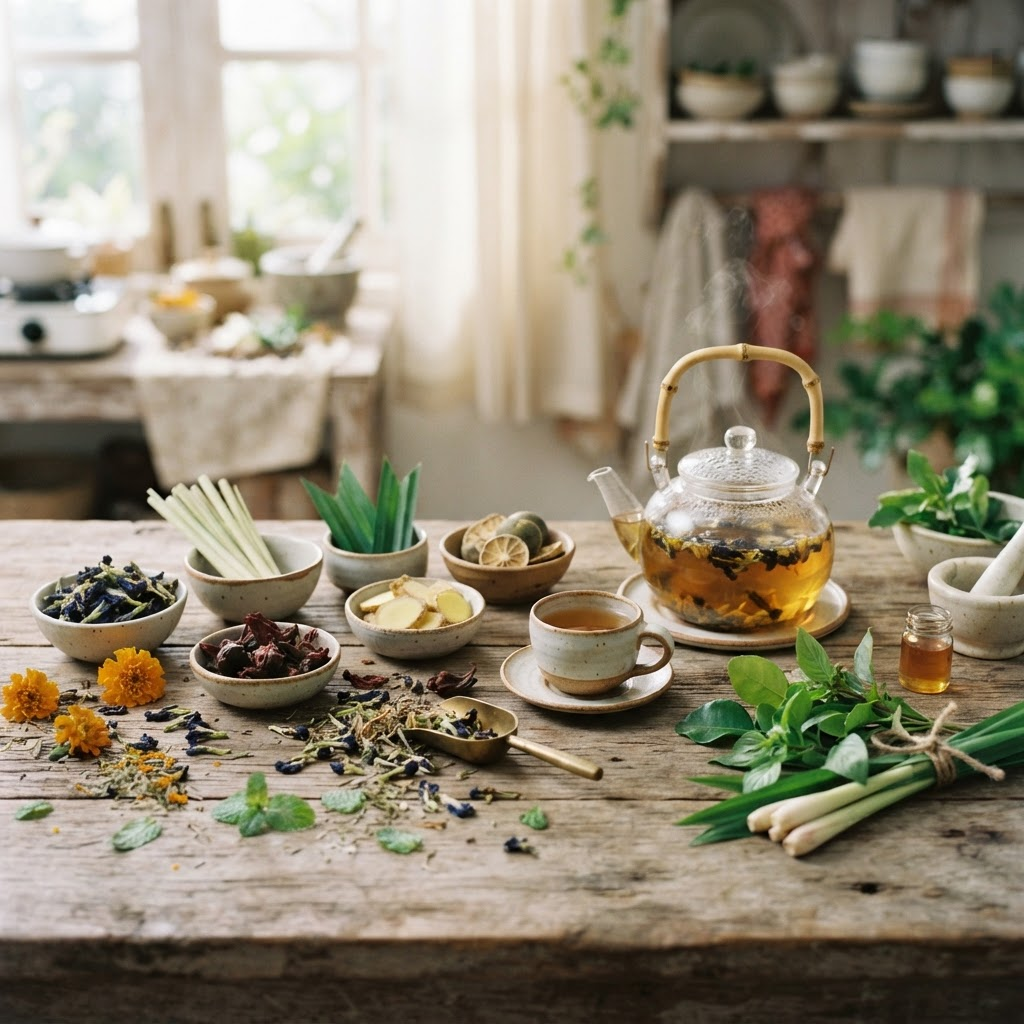
Long before a blend ever reaches a teapot, it starts as a walk through the garden. In Chiang Mai, mornings are cool enough to catch the scent of lemongrass and pandan before the heat sets in, and that first impression — sharp, green, a little sweet — is often the seed of a new recipe.
Reading the Leaf
Every herb has a personality. Butterfly pea flower brings color but almost no flavor, so it plays a supporting role. Roselle is tart and needs something round to balance it — usually a touch of dried ginger or a spoon of honey. Lemongrass is confident and a little bossy; a good blend gives it room without letting it take over everything else in the cup.
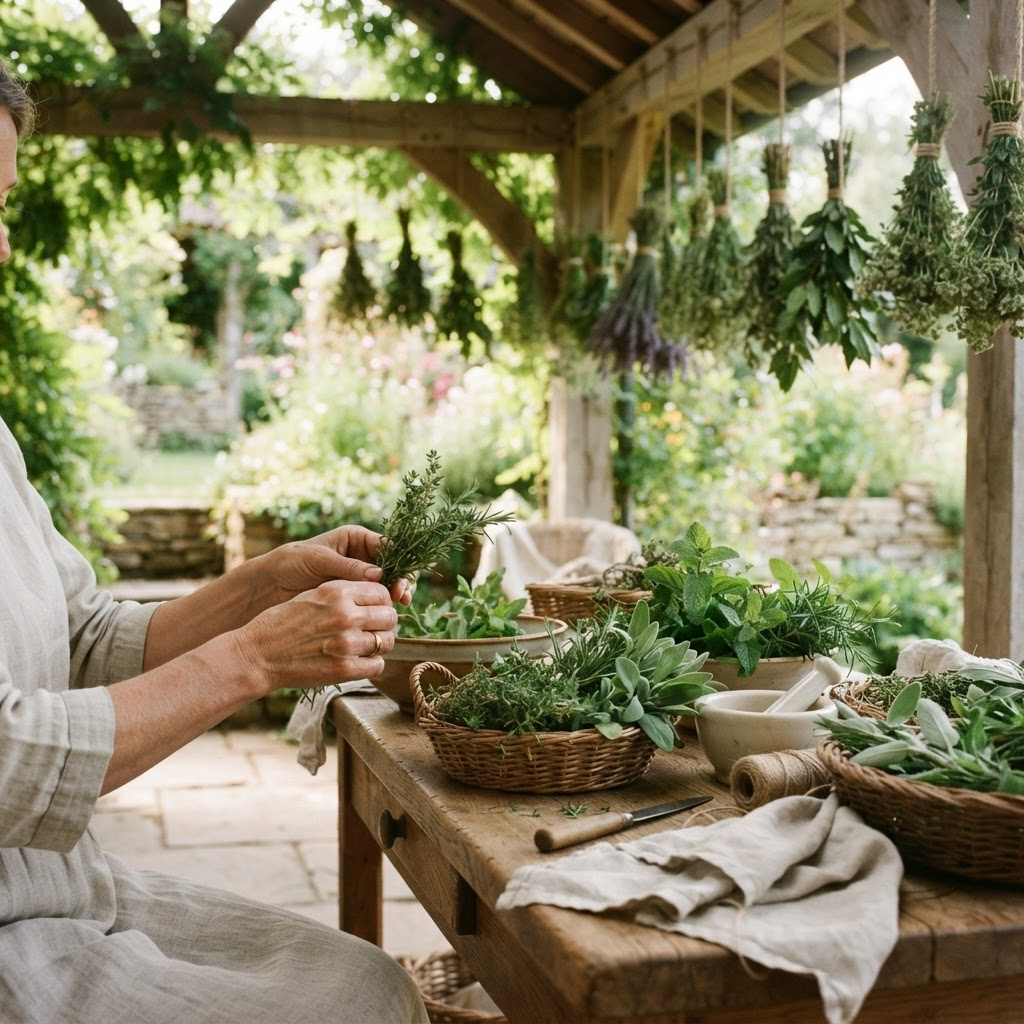
We dry everything slowly, out of direct sun, so the color and oils stay intact. A rushed dry gives you brittle, flavorless leaves. A patient one gives you tea that still smells like the garden a year later.
Building a Blend in Three Layers
In the workshop, we teach blending as three layers rather than a fixed recipe. The base layer is usually a mild, larger-leaf herb that carries the body of the tea — lemongrass or pandan. The middle layer adds character: ginger for warmth, roselle for brightness, chrysanthemum for a cooling finish. The top layer is aromatic and used sparingly — a few dried rose petals or a whisper of jasmine — because a little goes a long way.
A blend is finished not when you run out of ingredients, but when adding one more thing would take something away.
The best way to learn this is by tasting as you go — steep small test batches, adjust, and steep again. It is slower than following a printed recipe, but it is the only way a blend ends up tasting like it belongs to you.