 Uri Herbs Workshop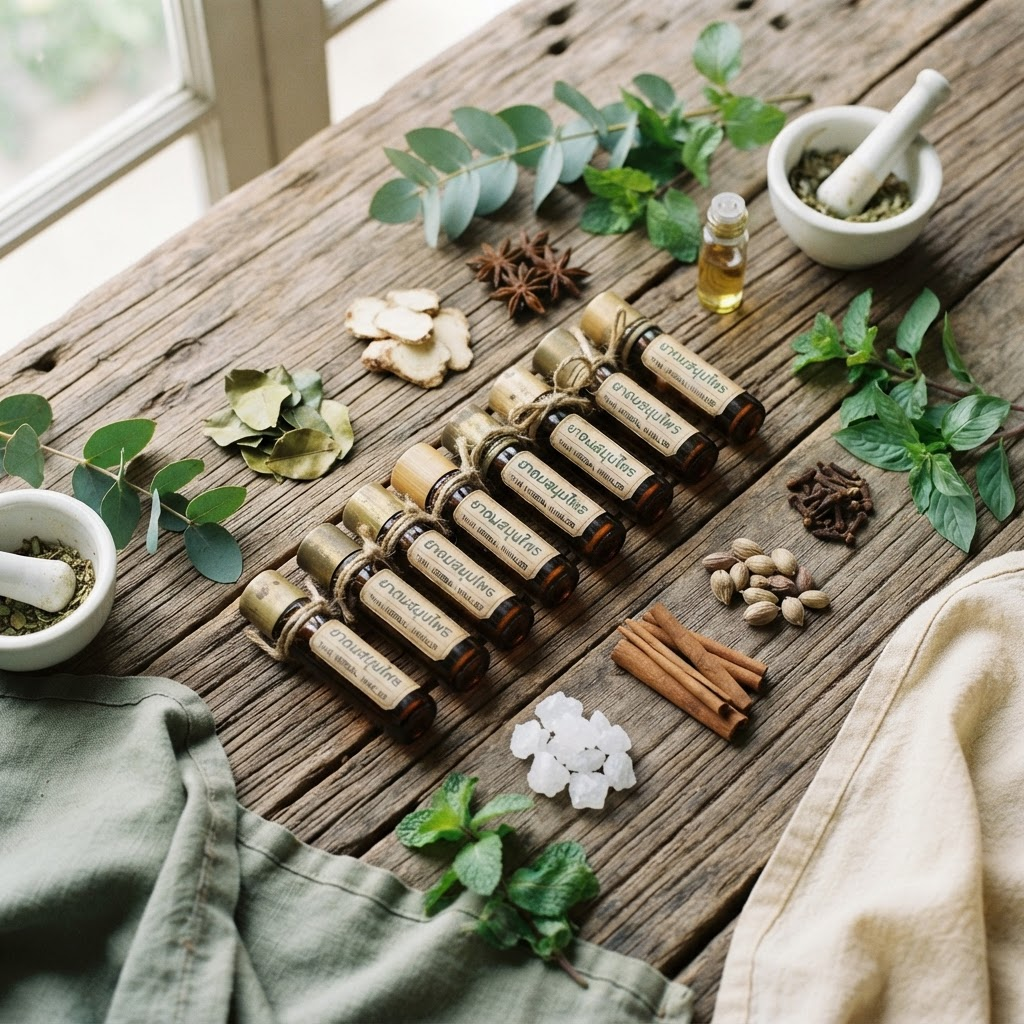
If you have spent any time in a Thai market, you have probably seen someone quietly unscrew a tiny glass bottle, take a short breath from it, and tuck it back into a bag without a second thought. That bottle is ya dom — literally "smelling medicine" — and it is one of the most practical pieces of Thai herbal tradition still in daily use.
What Is Actually Inside
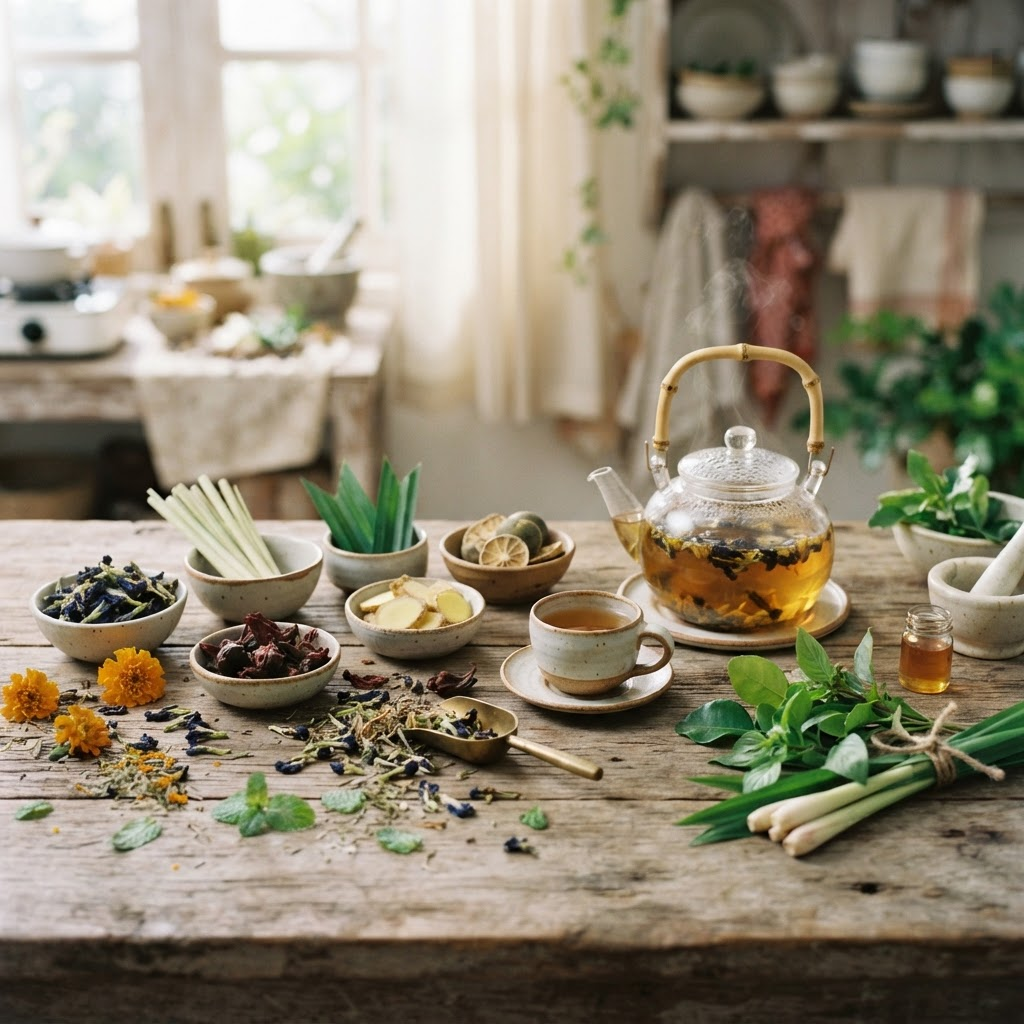
A traditional ya dom blend combines menthol crystals, camphor, and eucalyptus oil with a handful of dried Thai herbs — often including cajeput, kaffir lime peel, and sweet basil. The herbs are lightly crushed, layered into the bottle with a cotton wick, and topped with the essential oils so the wick can slowly draw the scent upward.
None of this is decorative. Menthol and camphor open the nasal passages almost instantly, which is why a single inhale can cut through a stuffy commute or a long afternoon in the heat. The dried herbs round out the sharper cooling notes with something warmer and more herbal.

Why It Has Lasted
Ya dom survives for the same reason a good tool survives: it does one job well and it is small enough to always have on hand. It does not need electricity, refrigeration, or measuring. You twist it open, breathe in, and twist it shut. In a workshop setting, it is also one of the most satisfying things to make in an afternoon — you leave holding something you will actually use that same week.
When we teach it, we let each person adjust their own ratio of menthol to herbs. Some like it sharp enough to make their eyes water; others want something closer to a gentle, green scent they can use before bed. Both are correct — that is the whole point of making it yourself.